

Centralized Catalog Management gives retailers and suppliers a shared, structured hub for product information, validation, media, and approvals—so content is consistent, compliant, and ready for Shopify, Adobe Commerce (Magento), BigCommerce, marketplaces, and ERP.
Capture detailed information for each product and its variants—size, color, material, pricing, dimensions, compliance flags, and more—using a comprehensive schema that stays consistent across suppliers.

Create reusable templates for common categories (e.g., Apparel > Tops, Tools > Power Drills) to streamline data entry and enforce consistency when onboarding new products or variants from multiple suppliers.

Automatically check product and variant data against predefined rules and standards before products go live, minimizing catalog errors and downstream operational issues.
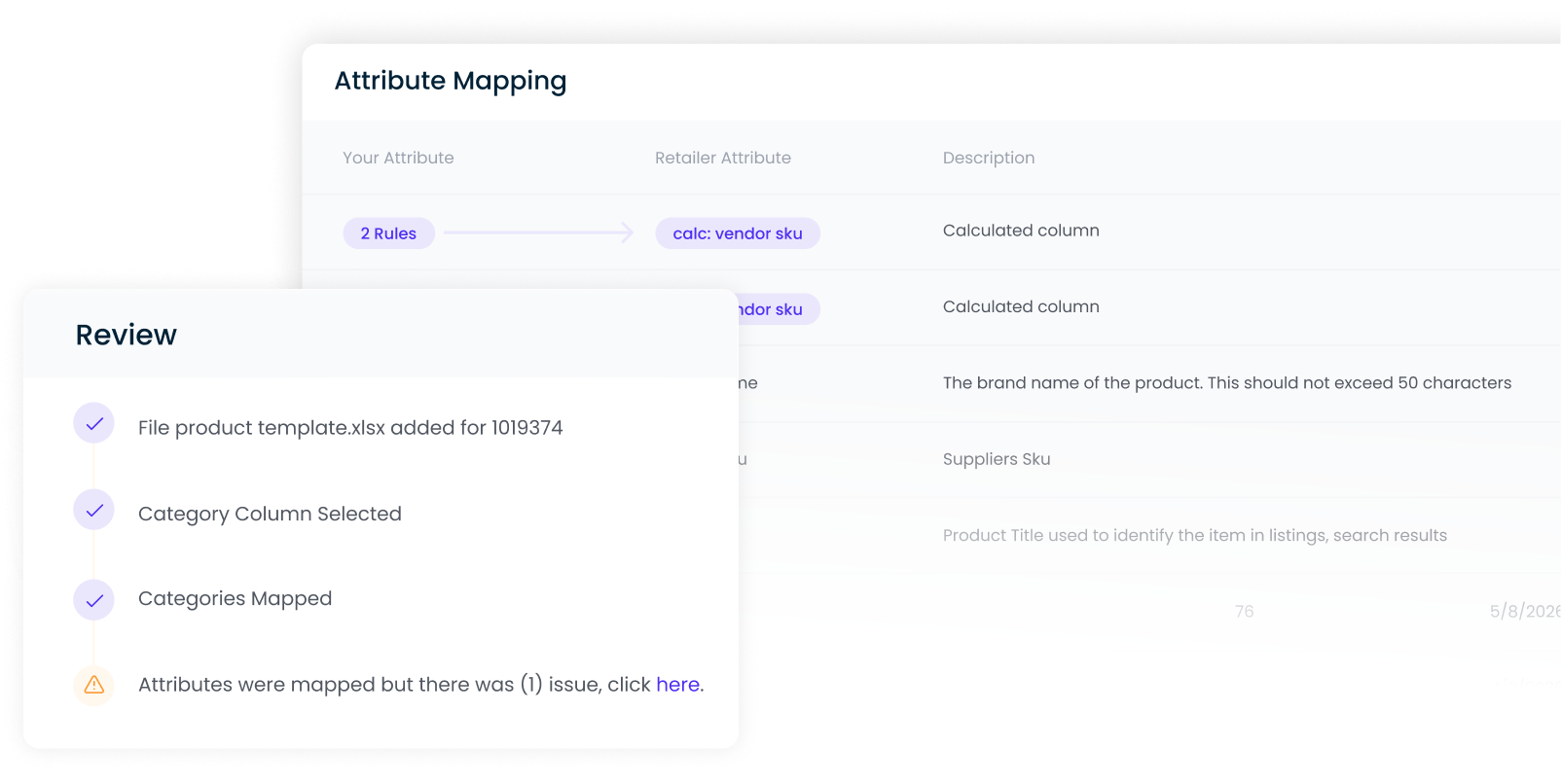
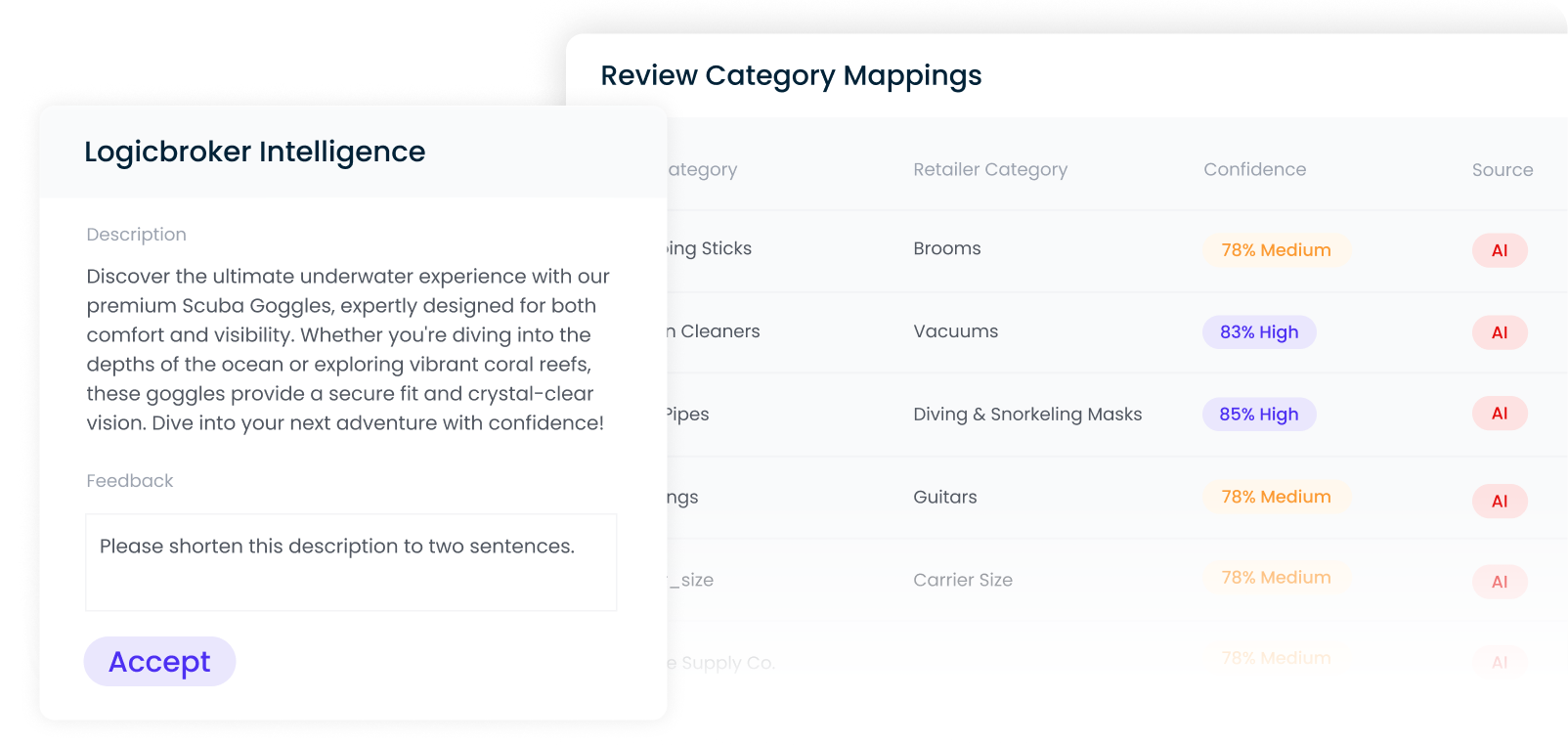
Leverage AI to map supplier‑provided data to your catalog structure, fill in missing attributes, and enrich product content with enhanced descriptions, tags, or specifications—grounded in your approved taxonomy and style.
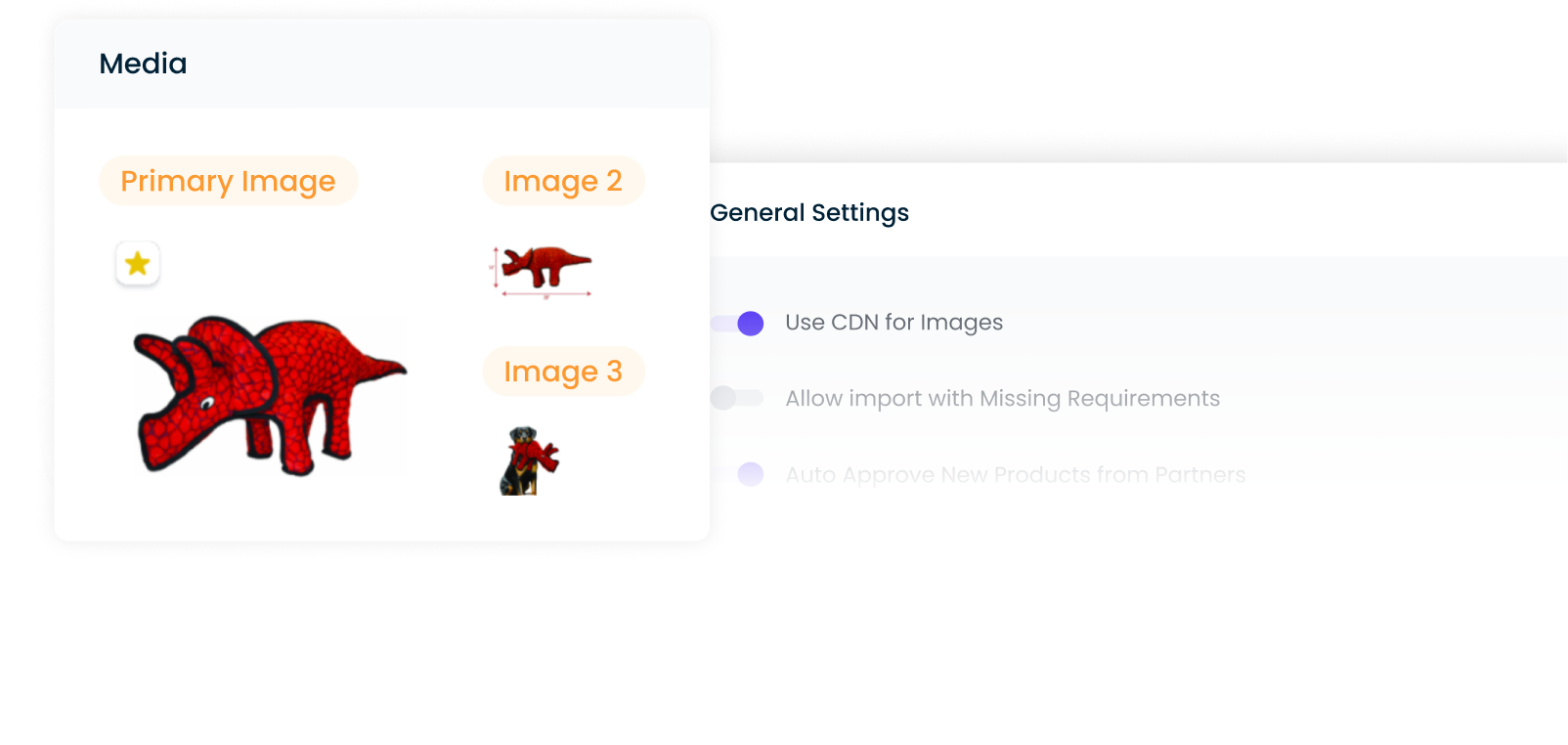
Centralize images, videos, documents, and rich media with automatic resizing, formatting, and optimization so assets are ready for any sales channel or marketing use case.
Enable cross‑functional teams (merchandising, eCommerce, compliance, finance) to review, suggest, and approve product selections with a transparent workflow.

01.
Set taxonomy, category templates, required attributes, and media rules.
02.
Suppliers upload via portal/feeds or connect via API/EDI/app connectors.
03.
AI aligns supplier data to your model, proposes fixes, and enriches content.
04.
The engine checks completeness, formatting, and channel‑specific rules; items failing checks are flagged with clear guidance.
05.
Collaborators review and sign off; approvals unlock publishing.
05.
Publish to storefronts, marketplaces, and ERP with connector‑specific mappings; track acceptance/suppression.

Templates and AI mapping reduce manual cleanup.
Validation and media transformation meet channel standards the first time.
Accurate specs and images reduce customer confusion.
Built‑in reviews and approvals remove back‑and‑forth and provide audit trails.
No—start with your highest‑impact categories. Add templates and rules over time without breaking existing listings.
Yes—use APIs or prebuilt connectors. Logicbroker can act as your catalog hub or as a syndication/control layer alongside a PIM/DAM.
AI suggestions are constrained by your taxonomy, templates, and style. Human reviewers accept or edit before publish.
Rejections appear with reasons; fix centrally and re‑publish. Validation rules can be tuned to catch these next time.